
Quick Answer
The main benefits of a rooftop garden in an apartment building are a cooler building, lower cooling energy use, better stormwater control, cleaner and quieter surroundings, a longer-lasting roof, and a shared green space for relaxation and community life. In a hot, concrete-heavy city like Karachi, the cooling and wellbeing benefits matter most.
What Is a Rooftop Garden?
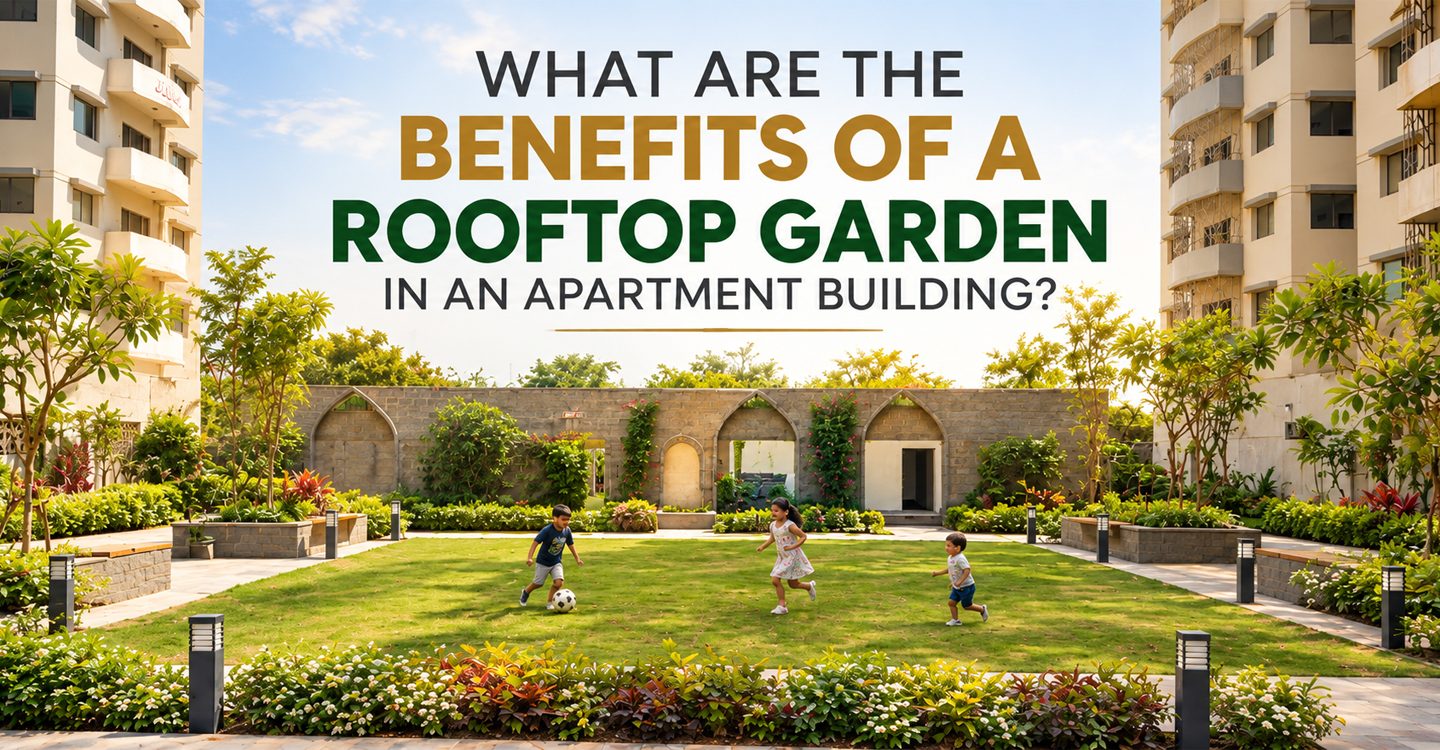
A rooftop garden is a planted space built on a building’s roof. It ranges from a thin layer of low plants (an “extensive” green roof) to a deeper, walkable garden (an “intensive” one). The EPA notes that intensive green roofs can also serve as recreational green space. That makes them especially relevant for apartment buildings, where residents share one space.
Why Rooftop Gardens Matter in Karachi
Karachi is an urban heat island: it is warmer than the areas around it. Heat islands form where vegetation is scarce and development is dense, and Karachi’s summer heat is a recognised public health issue. A severe heatwave claimed over 1,200 lives in the city in 2015. Research by the Karachi Urban Lab found that over roughly 60 years, daytime temperatures have risen by about 1.6°C and nighttime temperatures by about 2.4°C, which erodes the cooler evenings the city is known for.
Pakistan’s own heatwave technical report points the same way. It lists green roofs as one way to reduce the urban heat island effect. A single rooftop garden will not cool a city. But every planted roof replaces a heat-absorbing surface, and the effect adds up as more buildings do it.
The Main Benefits of a Rooftop Garden
1. A Cooler Building and a Cooler Roof
Green roofs provide shade and remove heat from the air through evapotranspiration, which lowers roof-surface and surrounding air temperatures. For top-floor apartments, which often feel the heat most, this can make a real difference in comfort.
2. Lower Energy Use
The EPA explains that green roofs absorb heat and act as insulators, reducing the energy needed for cooling and heating. In Karachi, where air conditioning drives much of a building’s electricity demand, less heat entering through the roof can help reduce that load. The actual saving depends on the roof design and the building.
3. Better Stormwater Management
Green roofs can reduce and slow stormwater runoff and filter some pollutants from rainfall. The actual performance depends on local rainfall patterns. Karachi gets short, intense rain events, so a planted roof can ease the first rush of runoff, though it is not a substitute for proper drainage.
4. Cleaner Air and a Quieter Building
Green roofs can absorb pollutants and carbon dioxide and provide natural habitat. A GSA study also found they absorb sound better than conventional roofs. The air-quality effect of one roof is modest, but it is a genuine co-benefit.
5. Mental Wellbeing and Healthier Routines
A WHO review found that urban green spaces offer psychological relaxation and stress reduction, encourage physical activity, and may reduce exposure to air pollution, noise and excessive heat. The same review concludes that small green spaces close to where people live matter, not just large parks. A rooftop garden is exactly that: green space a lift ride away. Karachi’s large parks can be far from where people actually live.
6. A Shared Space for Families and Neighbours
WHO also links urban green space to stronger social cohesion. In a high-rise, residents may rarely meet. A rooftop garden gives families a place for evening walks, children’s time outdoors and small community gatherings.
7. A Longer-Lasting Roof
The GSA report found that green roofs can last longer than conventional roofs, which can save on replacement costs over time. It also found that, over 50 years, the combined stormwater, energy, carbon and community benefits outweigh installation and maintenance costs. That study is US-based, so treat the exact numbers as indicative for Karachi.
Summary Table
| Benefit | How it helps | Who notices it most |
|---|---|---|
| Cooling | Shade and evapotranspiration reduce roof heat | Top-floor residents |
| Energy | Insulation reduces cooling demand | Building management, owners |
| Stormwater | Slows and filters runoff | The building and nearby drains |
| Air and noise | Absorbs pollutants and some sound | All residents |
| Wellbeing | Relaxation, activity, social contact | Families, older residents |
| Roof life | Protects roof layers from direct exposure | Owners and developers |
Rooftop Garden vs Cool Roof
A cool roof is a reflective surface. A rooftop garden is planted. The EPA notes that both help reduce heat islands, but green roofs add benefits such as stormwater filtering, pollutant absorption, habitat and, for intensive designs, recreational space. In an apartment building, a rooftop garden is the better fit if residents will actually use the space.
What to Check Before Relying on a Rooftop Garden
Rooftop gardens need careful planning. Ask these questions:
- Structure: The GSA report lists structural support as a key challenge. Soil, plants and water are heavy.
- Waterproofing and drainage: A failed membrane causes leaks into the floors below.
- Heat and wind tolerance: A high-rise roof in Karachi is hot, exposed and windy, so plant choice matters.
- Water supply and upkeep: Someone must water, prune and maintain it year-round.
- Safety: Railings, lighting, access rules and fire-safe layout for a space people will use in the evening.
Good sign: A well-run building answers these questions before opening the space.
Rooftop Gardens in Karachi Apartments: The FM Towers Example
FM Towers is a high-rise project in Scheme 33, Gulzar-e-Hijri, on Suparco Road. Its website describes 8 towers (Ground+13 and Ground+22) and a rooftop garden for peaceful evenings and family gatherings, alongside amenities like a gym, a children’s play area and a family lounge. The project’s rooftop garden is listed among its shared amenities, with the stated purpose of family evenings and community events.
Scheme 33 is one of Karachi’s fast-growing residential areas, and projects there often include shared amenities like this. The website does not publish details such as garden size, planting plan or opening hours, so prospective residents should confirm those directly. You can see how the project presents its amenities in the gallery, and read more about the project’s location and vision on the Scheme 33 overview.
FAQs
Are rooftop gardens worth it in an apartment building?
Usually yes, when they are designed and maintained properly. The benefits are cooling, energy savings, stormwater control and a shared green space. The costs are structural planning and ongoing upkeep.
Do rooftop gardens reduce heat in Karachi?
They can help. Green roofs reduce heat through shade and evapotranspiration. Karachi-specific measurements for individual buildings are limited, so the size of the effect varies. Some Karachi roof-garden owners report that their homes feel cooler than their neighbours’, though this is anecdotal.
Can a rooftop garden damage the building?
It can if waterproofing, drainage or load capacity are poorly planned. A correctly engineered roof garden is designed for these loads.
What is the difference between a rooftop garden and a green roof?
“Green roof” is the broader term. A rooftop garden usually means an intensive, walkable design with deeper soil and more varied plants.
Do rooftop gardens help with stormwater?
Yes, by slowing and reducing runoff. The amount depends on rainfall patterns.
Are rooftop gardens good for mental health?
WHO’s review found that nearby green space supports stress reduction and relaxation.
Does FM Towers have a rooftop garden?
According to its website, yes. The amenities page lists a rooftop garden for family evenings and community events. Confirm current details with the project team.